How to Check a Used Tire Before You Buy It in 2026
02 October 2026 · 8 min read
Buying a used tire can be one of the smartest moves a budget-conscious driver makes, or one of the most expensive mistakes, depending on what's actually inside the rubber. A used tire with plenty of tread can still be unsafe if it's old, has internal damage, or was pulled from a wrecked vehicle. A tire that looks a little worn but is structurally sound and the right size for your car can save you real money over a new set. The difference comes down to a handful of checks you can do yourself in the parking lot before you hand over any cash, plus a couple of things worth paying a shop to confirm.
This guide walks through what to look at, in order, and points to the kind of used tire and tire repair shops already listed in this directory across Alabama — Cullman, Anniston, Dothan, Birmingham, Albertville, Andalusia and Demopolis — as examples of where these checks happen in practice.
Why the DOT Date Code Matters More Than Tread
Every tire sold in the United States carries a DOT (Department of Transportation) code molded into the sidewall. The last four digits are the ones that matter most for a used-tire buyer: they give the week and year the tire was manufactured. A code ending in "2319," for example, means the tire was built in the 23rd week of 2019.
Tire manufacturers and safety groups generally recommend replacing tires once they reach six to ten years from the manufacture date, regardless of how much tread is left, because the rubber compound hardens and the internal belts degrade with age and heat exposure. A used tire with deep tread but a date code from eight or nine years ago is a tire you should walk away from. Find this number before you look at anything else — if the seller can't show you a readable DOT code, that alone is a reason to pass.
Checking Tread Depth Without Guesswork
Tread depth is measured in 32nds of an inch. New passenger tires typically start around 10/32" to 11/32". The legal minimum in most states, including Alabama, is 2/32" — the point at which the built-in tread wear indicator bars (small raised bars across the tread grooves) become flush with the surrounding tread.
A tread depth gauge costs only a few dollars and gives an exact number, but if you don't have one, a quarter works as a rough field check: insert it into the tread groove with Washington's head facing you. If the tread covers part of his head, there's more than 4/32" left, which is a reasonable minimum to buy on for most daily driving. Less than that, and the tire is better suited to use as a spare, not a primary tire, especially in wet conditions where shallow tread dramatically increases stopping distance.
Check tread depth in at least three spots across the tire, not just one. Uneven wear across the tread face is itself a red flag covered in the next section.
Tread doesn't wear evenly unless everything upstream of it — alignment, suspension, inflation habits — was in good shape on the vehicle the tire came off of. That makes wear patterns useful information, not just a measurement.
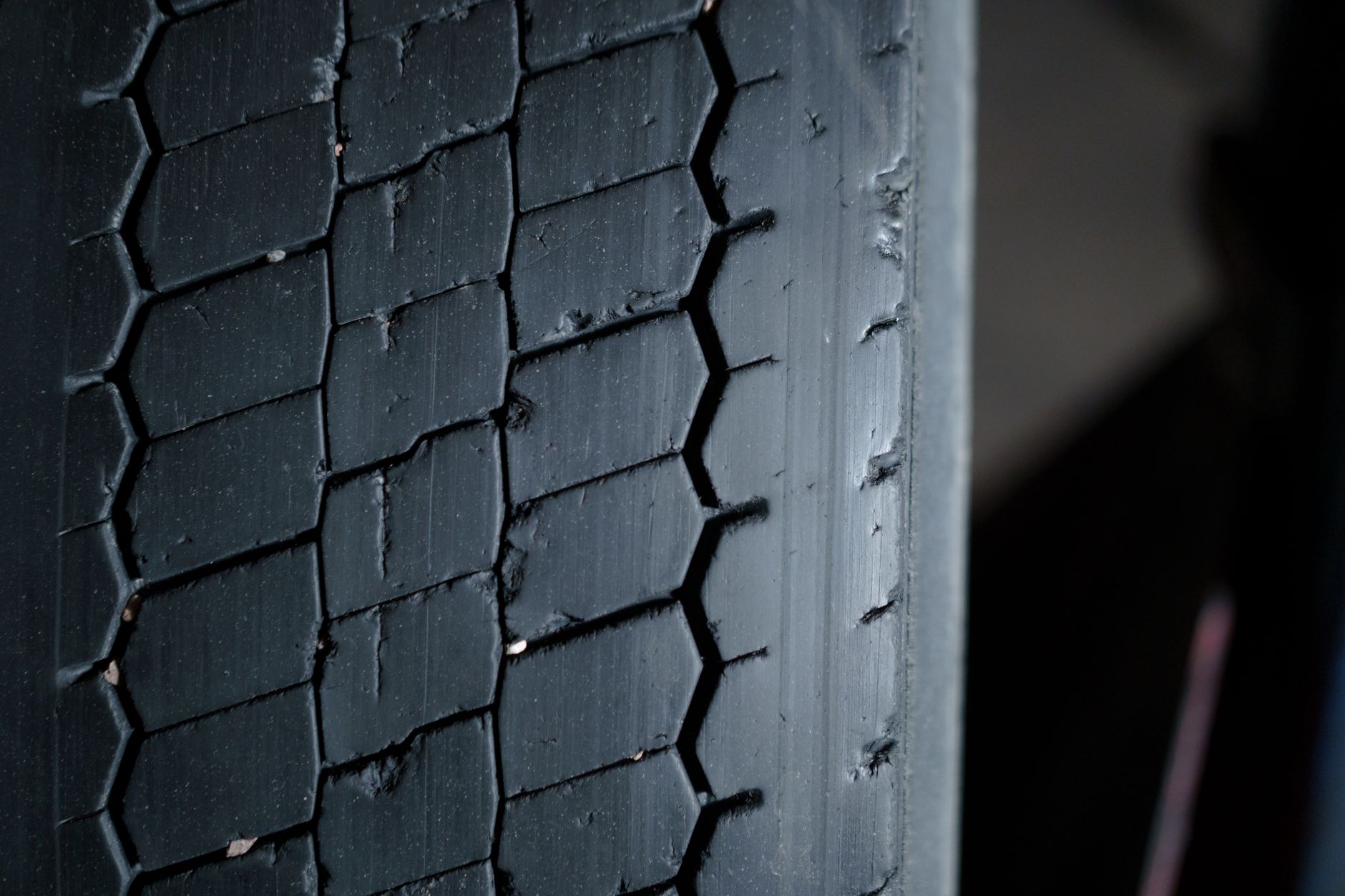
Wear concentrated on the outer and inner edges with a less-worn center strip usually points to chronic underinflation. Wear concentrated in the center with better tread at the edges points to overinflation. Wear that's noticeably worse on one edge than the other on the same tire often means the donor vehicle had an alignment problem. None of these patterns make a tire unsafe by themselves, but they tell you the tire was run under less-than-ideal conditions, and they're worth factoring into the price you're willing to pay. A wheel alignment check after installing used tires is a reasonable precaution if you see any of these patterns.
Inspecting the Sidewall and Casing for Damage
The sidewall is where structural problems show up, and structural problems are the ones that can fail suddenly rather than wear down gradually. Run your hand and eyes around the entire sidewall, not just the part facing you on the rack, looking for:
Bulges or bubbles — a soft or raised spot means the internal belt structure has separated from the rubber, usually from a hard impact. This is not repairable and the tire should be rejected outright.
Cracking in the rubber (sidewall "weather checking") — fine cracks across the sidewall, especially combined with an older DOT date, indicate the rubber has dried out and lost flexibility.
Patches, plugs, or signs of prior repair — a plug near the center of the tread, done correctly, is usually fine on a tire that's otherwise sound. A patch or plug on or near the sidewall is a repair that shouldn't have been made in the first place, since that part of the tire flexes too much to hold a repair safely.
Uneven or scalloped wear on the inside edge — can indicate the tire spent time underinflated or the vehicle had worn suspension components.
A flashlight helps here more than most people expect — raking light across the sidewall at a low angle makes cracking and bulges far easier to spot than looking straight on under fluorescent lights.
Matching Size, Load Index and Speed Rating
A used tire that's structurally perfect is still the wrong tire if it doesn't match what your vehicle needs. The sidewall carries a string like "P215/65R16 98H" — the size (215/65R16), the load index (98), and the speed rating (H). All three should match, or exceed, what's specified in your vehicle's owner's manual or on the placard inside the driver's door.
Running a lower load index than specified is a real safety issue on anything carrying passengers or cargo regularly. A mismatched speed rating is less immediately dangerous for most daily driving but should still be avoided — insurers and some state inspections can flag it. If you're buying four tires, all four should match each other as well as the vehicle; mixing tread patterns or significantly different tread depths front-to-back can affect handling, especially in rain.
Where Alabama Drivers Find Used Tires
Dedicated used tire shops exist specifically because the checks above take a practiced eye, and a shop handling dozens of pulled tires a week usually sorts out the unsafe ones before they ever reach a rack. A few examples already listed in this directory:
In Cullman and Anniston, used tire shops tend to serve a mix of daily commuters and budget-conscious buyers replacing one or two tires rather than a full set. Dothan and Birmingham have enough listings in this directory's used-tire-shops category that comparing hours and location before driving across town is worth the five minutes it takes.
Albertville and Andalusia both show used tire listings in this directory, including a retreader in Andalusia — retreaded tires are a related but distinct category from pulled used tires, built on an inspected casing with new tread bonded on, and worth asking about specifically if a shop offers both.
When to Pay for a Second Opinion
Everything above can be checked by eye in a parking lot, but a shop with a tire machine can do one thing you can't: break the tire down from the wheel (or use a bead-breaker) to inspect the inside of the casing, where some separations and prior repairs aren't visible from outside. If you're buying a used tire still mounted on a wheel, or buying more than one or two tires at once, having a repair shop look them over before or right after installation is cheap insurance relative to the cost of a tire failing on the highway.
Shops like this one in Demopolis, listed under this directory's tire repair category, handle mounting, balancing and the kind of internal inspection that catches problems a visual check in a parking lot will miss. Ask specifically whether they'll inspect a tire you're bringing in before they mount it — most shops that do any used-tire business are used to the request.
A Quick Reference Checklist
The table below summarizes the checks in the order they're worth doing, roughly fastest and most disqualifying first:
Check
What disqualifies the tire
Tool needed
DOT date code
Manufactured more than ~6-10 years ago
None — read the sidewall
Sidewall bulges or bubbles
Any bulge, no exceptions
None — eyes and hands
Sidewall cracking
Deep or widespread cracking
Flashlight helps
Tread depth
Below roughly 4/32" for daily use
Quarter or tread gauge
Sidewall patches/plugs
Any patch or plug on the sidewall itself
None — eyes
Size / load index / speed rating
Any mismatch with vehicle placard
Compare sidewall to door placard
Internal casing condition
Separation found inside (shop only)
Tire machine at a shop
The Takeaway
A used tire is worth buying when the DOT code shows it's recent, the sidewall is free of bulges and cracking, tread depth clears roughly 4/32" across the face, the size and ratings match your vehicle, and — ideally — a shop with a tire machine has had a look at the inside of the casing. Skip any tire that fails even one of the first three checks; those are the ones tied to sudden failure rather than gradual wear. For everything else, the checks above take less time than the drive to go pick the tire up, and they're the difference between a genuine bargain and a tire you'll be replacing again within the month — or worse, on the shoulder of the highway.